
LinFIR
Precision FIR & IIR Filter Design for Loudspeakers and Rooms
LinFIR is a filter design tool and a DSP-faithful system simulator developed by DEM Audio. Design linear-phase or minimum-phase FIR filters, IIR crossovers and EQ, and see exactly what they will do to your real measurements: magnitude, phase, impulse, step and group delay, updated in real time.
It works in two modes: Loudspeaker Design, for multi-way crossovers, driver correction, time alignment and directivity, and Room Calibration, for multi-position in-room measurements and correction.
LinFIR is free for on-axis work, with every design and export feature included. The Advanced Module adds off-axis, directivity and spinorama analysis, and is a one-time purchase.
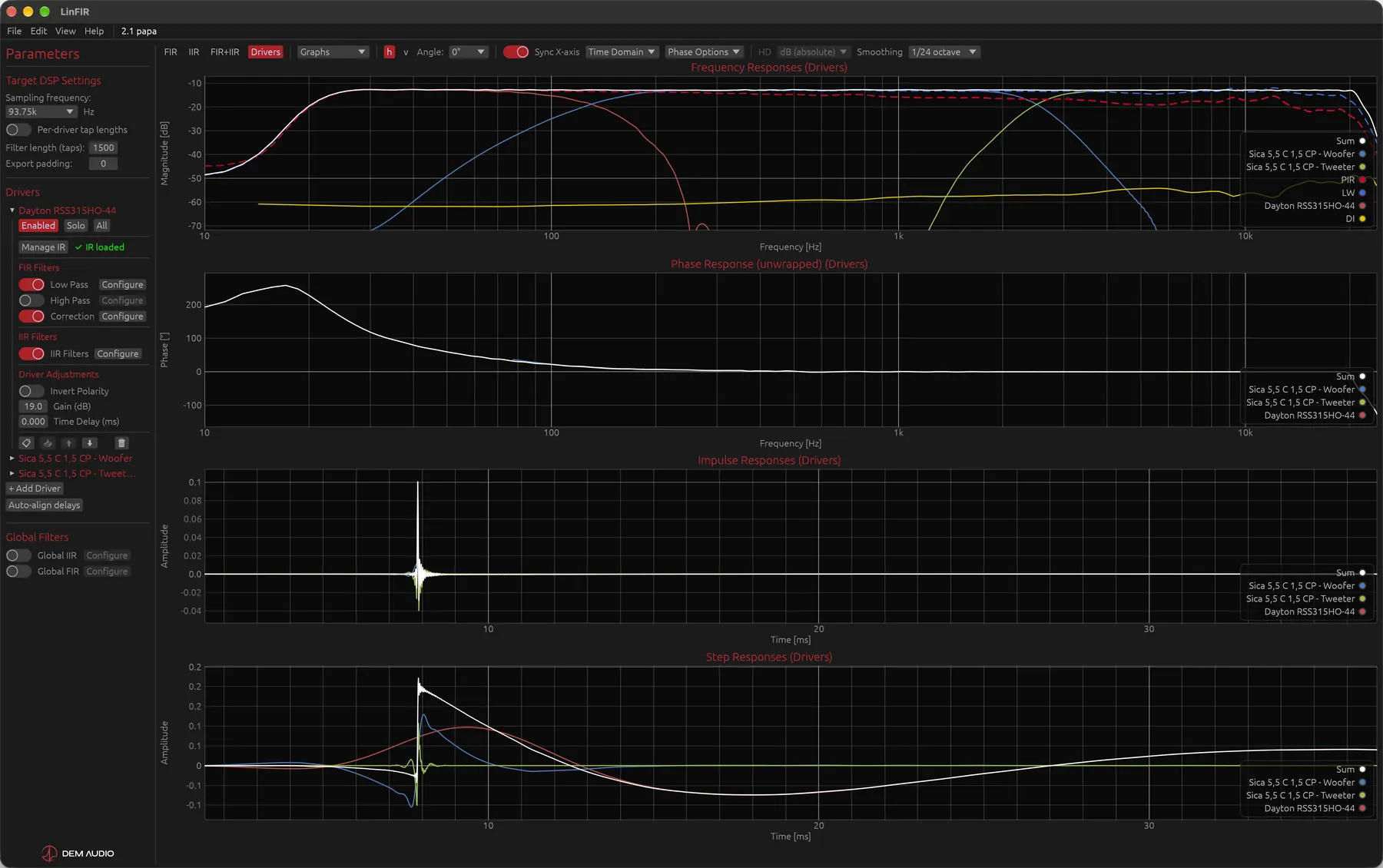
What LinFIR Does Best
Crossovers with Real-Time Feedback
Linear-phase Linkwitz-Riley, Butterworth, Bessel and brickwall FIR filters (32 to 65,536 taps), with causality adjustable from linear to minimum phase, alongside IIR crossovers. Every change is shown instantly on your drivers’ measured responses.
Driver and System Correction
FIR magnitude and phase correction to flat, Harman or custom target curves, and IIR Auto EQ. Correct against the on-axis, the Listening Window or the Predicted In-Room response, per driver or for the whole system.
Intuitive Time Alignment
Skip the “measure, adjust, remeasure” loop. Adjust delay and gain per driver and instantly see how the combined response changes across the crossover regions.
CTA-2034-A Spinorama
Listening Window, Early Reflections, Sound Power, Predicted In-Room Response and both Directivity Indices, computed per the ANSI/CTA-2034-A standard from your own polar measurements, with your filters applied.
Built-In Measurements
Exponential sine sweeps with harmonic distortion separation, microphone calibration files, driver-protection high-pass, and rotation table control (GRBL and Pololu Tic) for automated polar measurements.
Near-Field / Far-Field Splicing
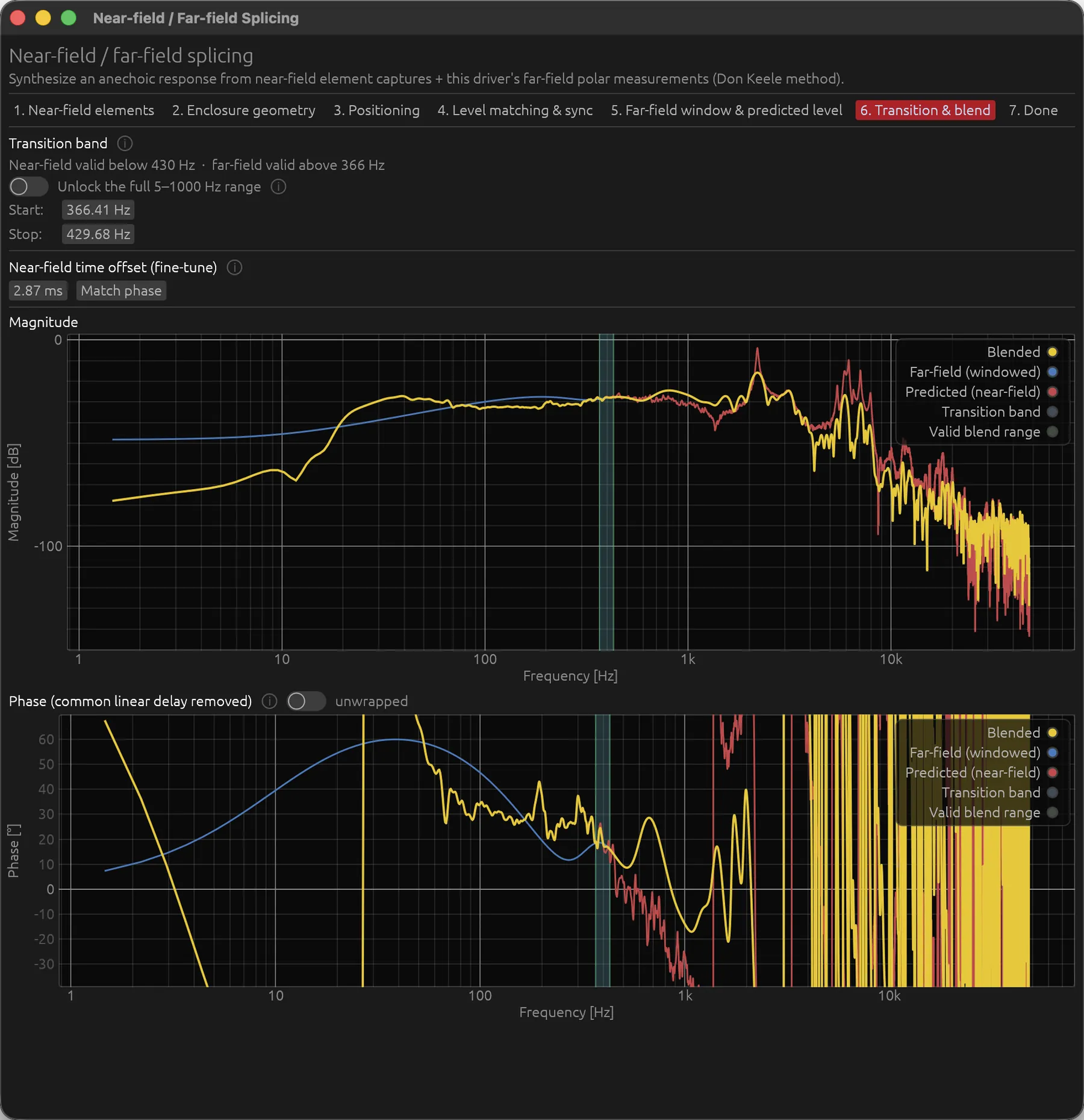
A step-by-step wizard that builds a full-range anechoic response from near-field captures and far-field polar measurements, including baffle diffraction, level matching and blending.
Core Features
Two Modes
Loudspeaker Design and Room Calibration, each with its own workflow
FIR Filters
32 to 65,536 taps, linear to minimum phase, Kaiser window shaping
IIR Filters
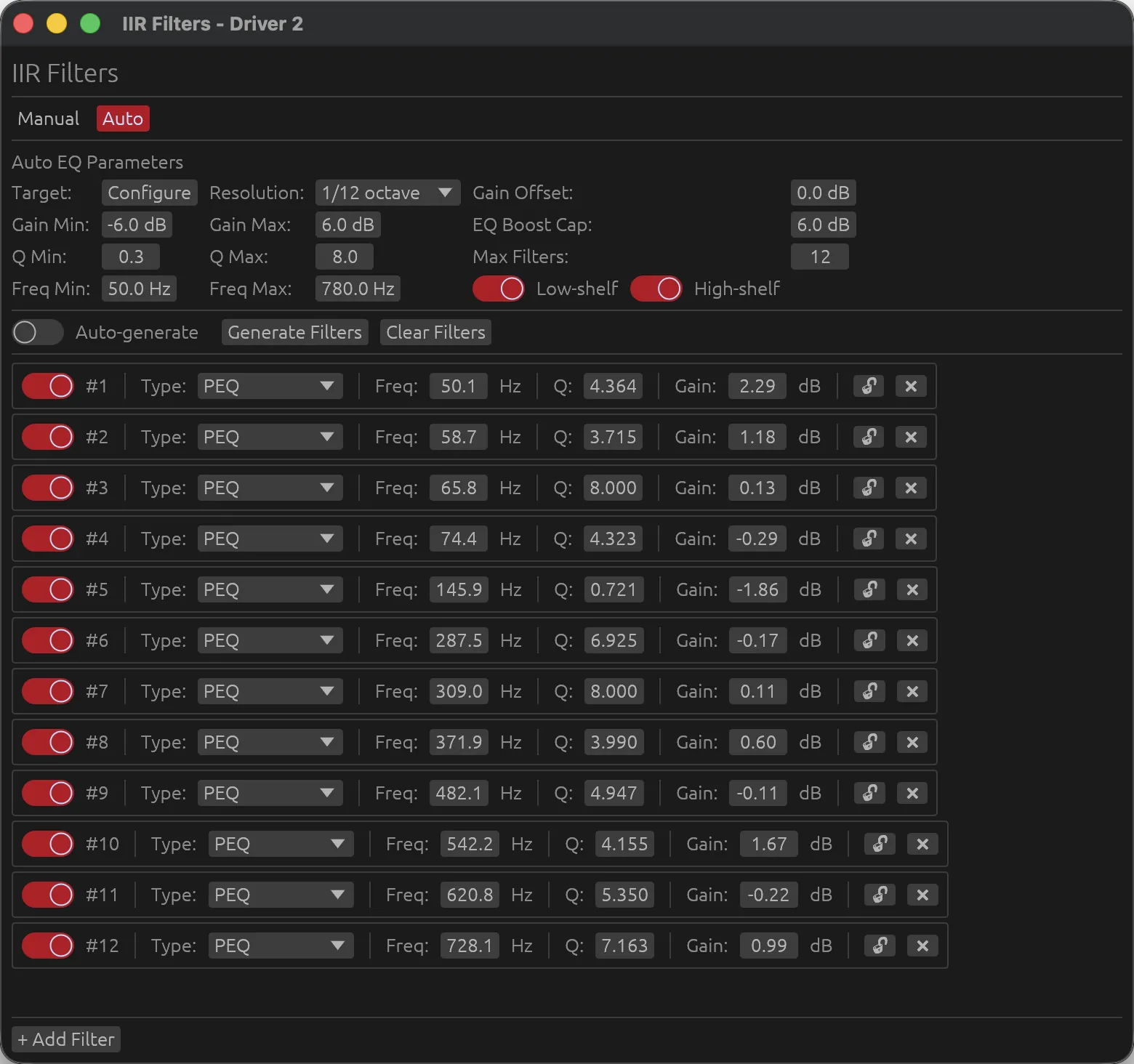
PEQ, shelves, all-pass and crossovers, with Auto EQ
Target Curves
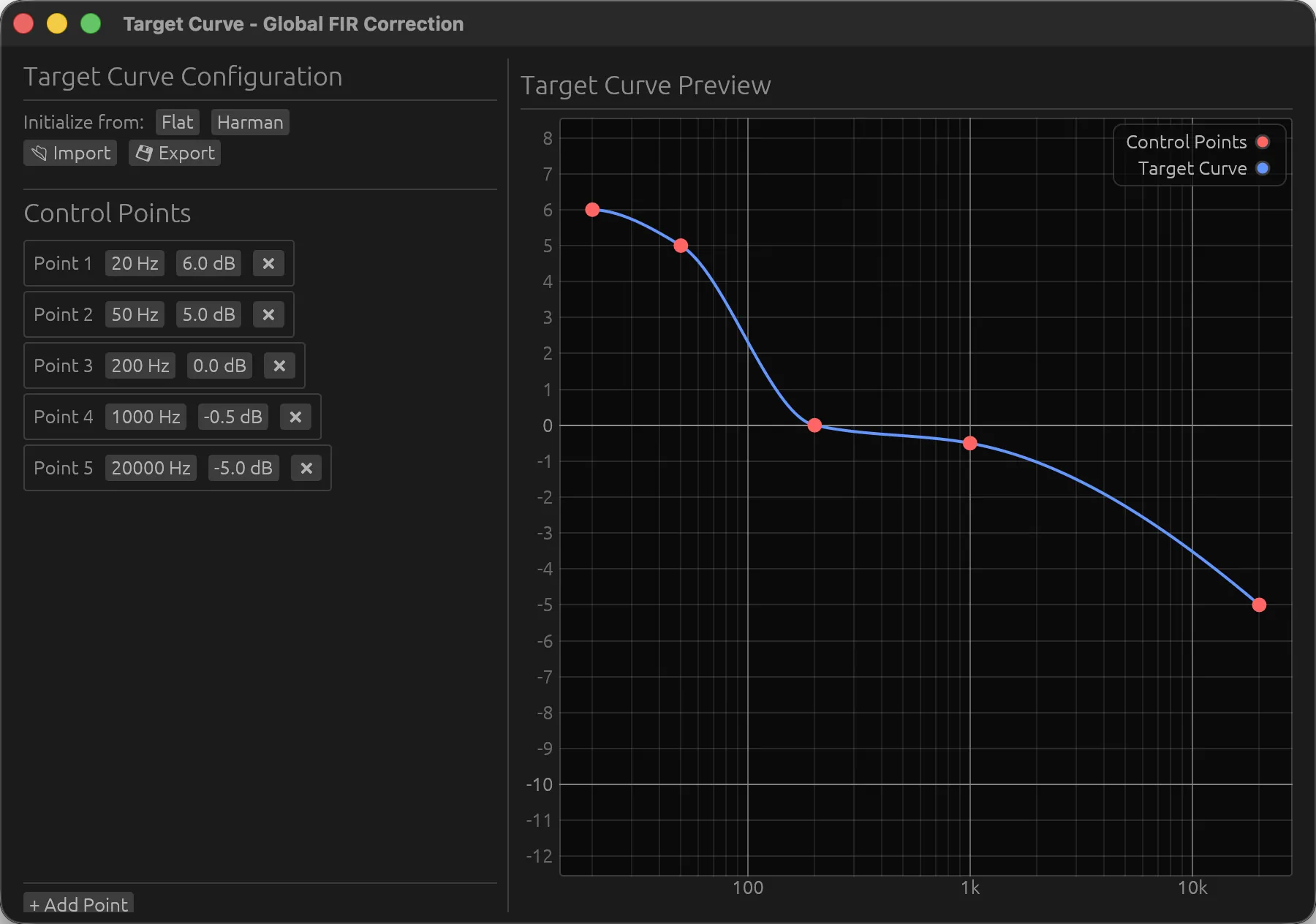
Flat, Harman in-room or your own custom targets
Measurements
Sweeps, mic calibration, multi-position averaging with automatic alignment
Visualization
Magnitude, phase, group delay, impulse, step and THD graphs, detachable windows
DSP Exports
CamillaDSP, MiniDSP, Q-SYS, Hypex FusionAmp and Powersoft Armonía
Cross-Platform
Mac and Windows, projects compatible across both
The Advanced Module
Everything LinFIR does on-axis is free. A license unlocks the tools that make the difference for serious loudspeaker design. €149, tax included, one-time purchase.
- Off-axis measurements, horizontal and vertical, with multi-angle views
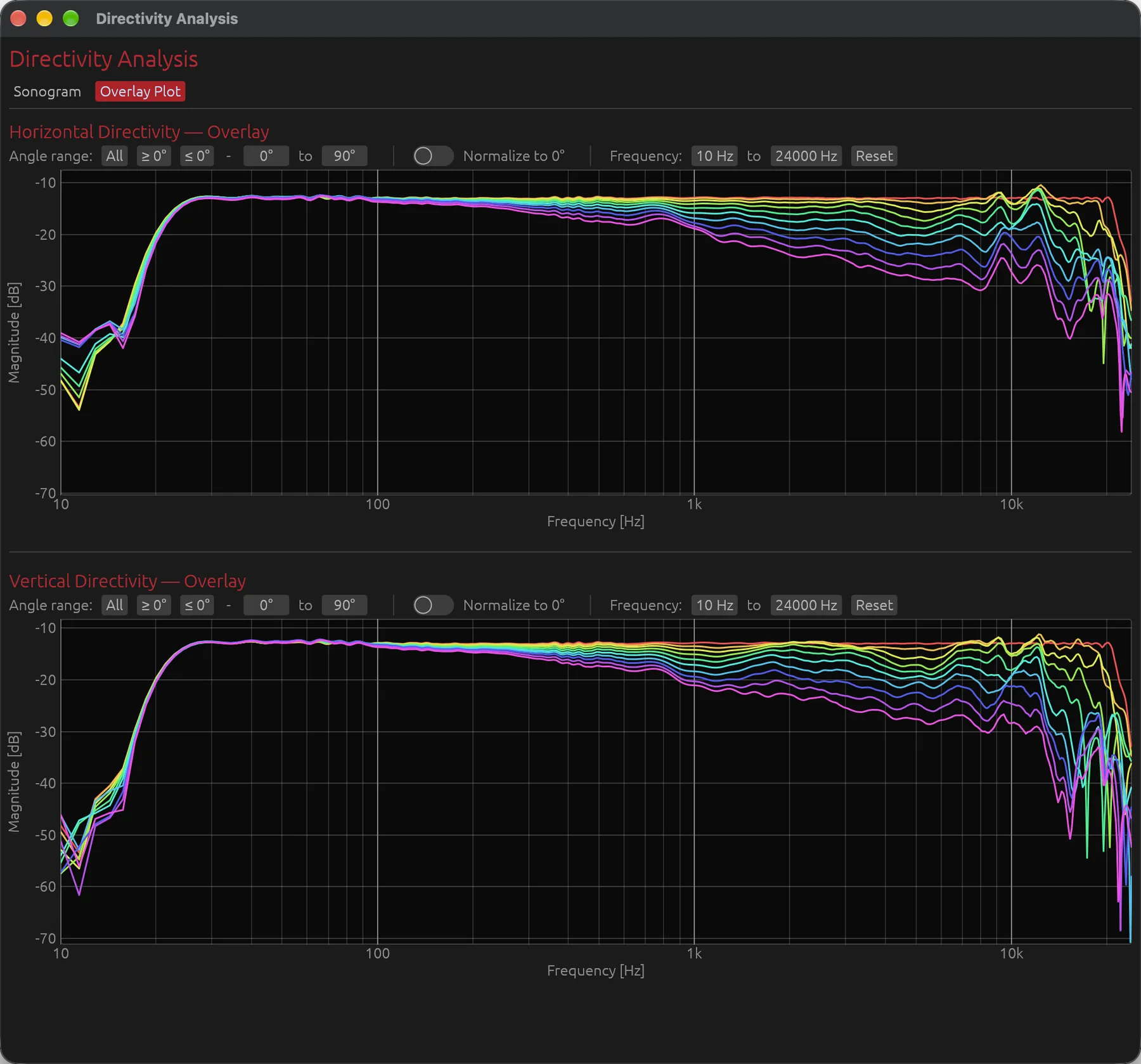
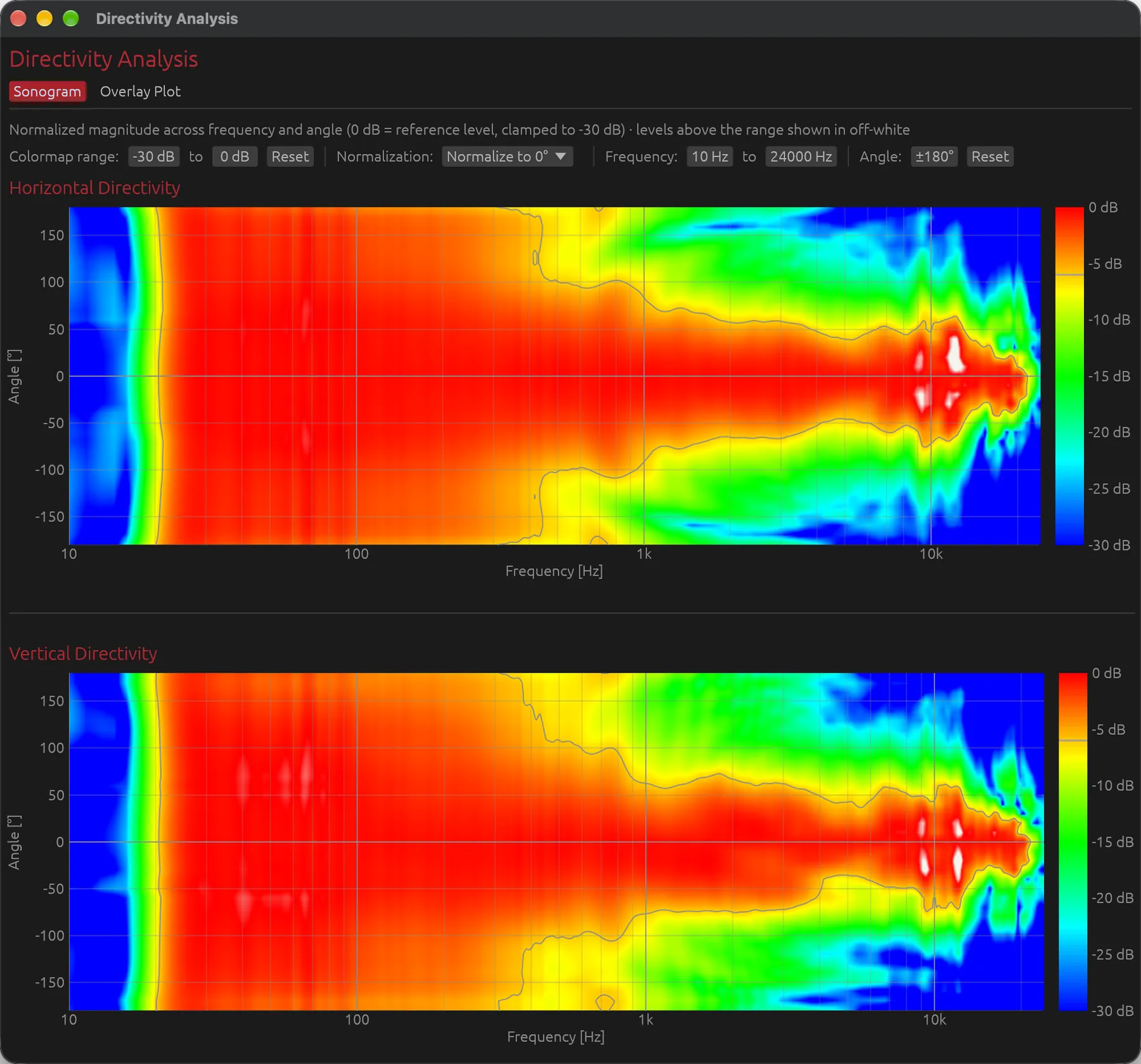
- Directivity analysis: sonogram, overlay plots and Directivity Index
- Full CTA-2034-A spinorama: Listening Window, Early Reflections, Sound Power, Predicted In-Room
- Off-axis prediction through the real signal chain, FIR and IIR included
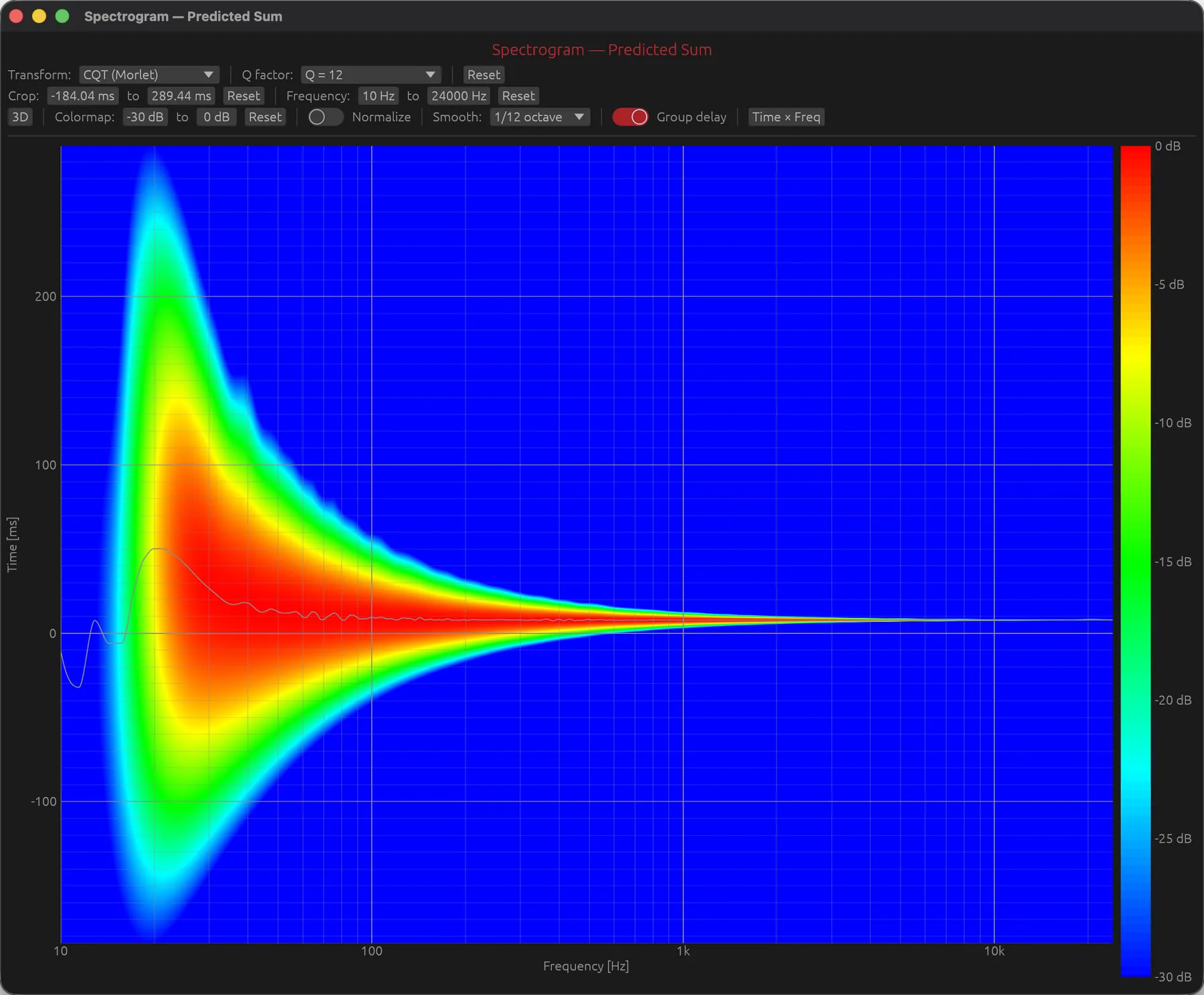
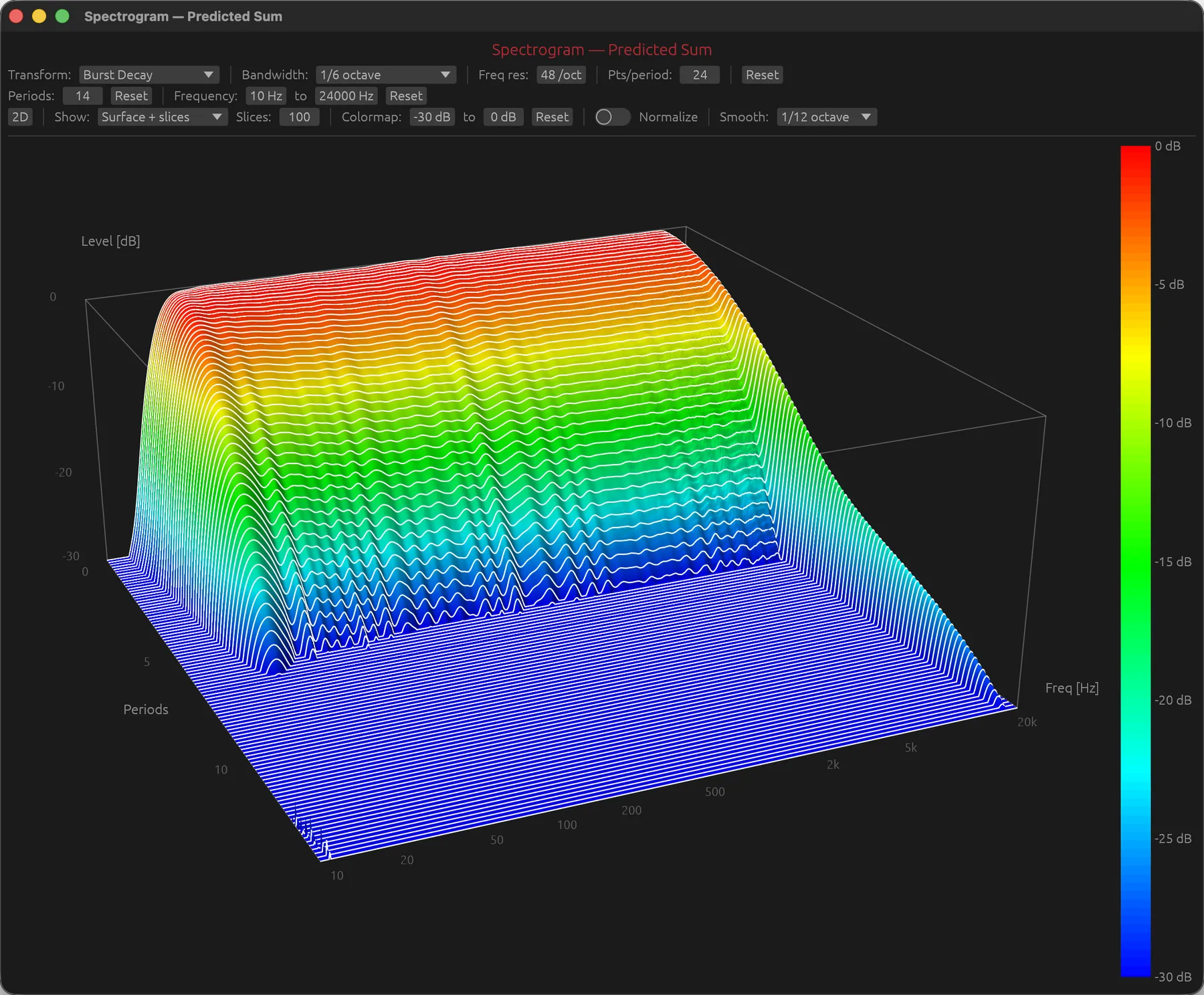
- Spectrogram, cumulative spectral decay and 3D waterfall
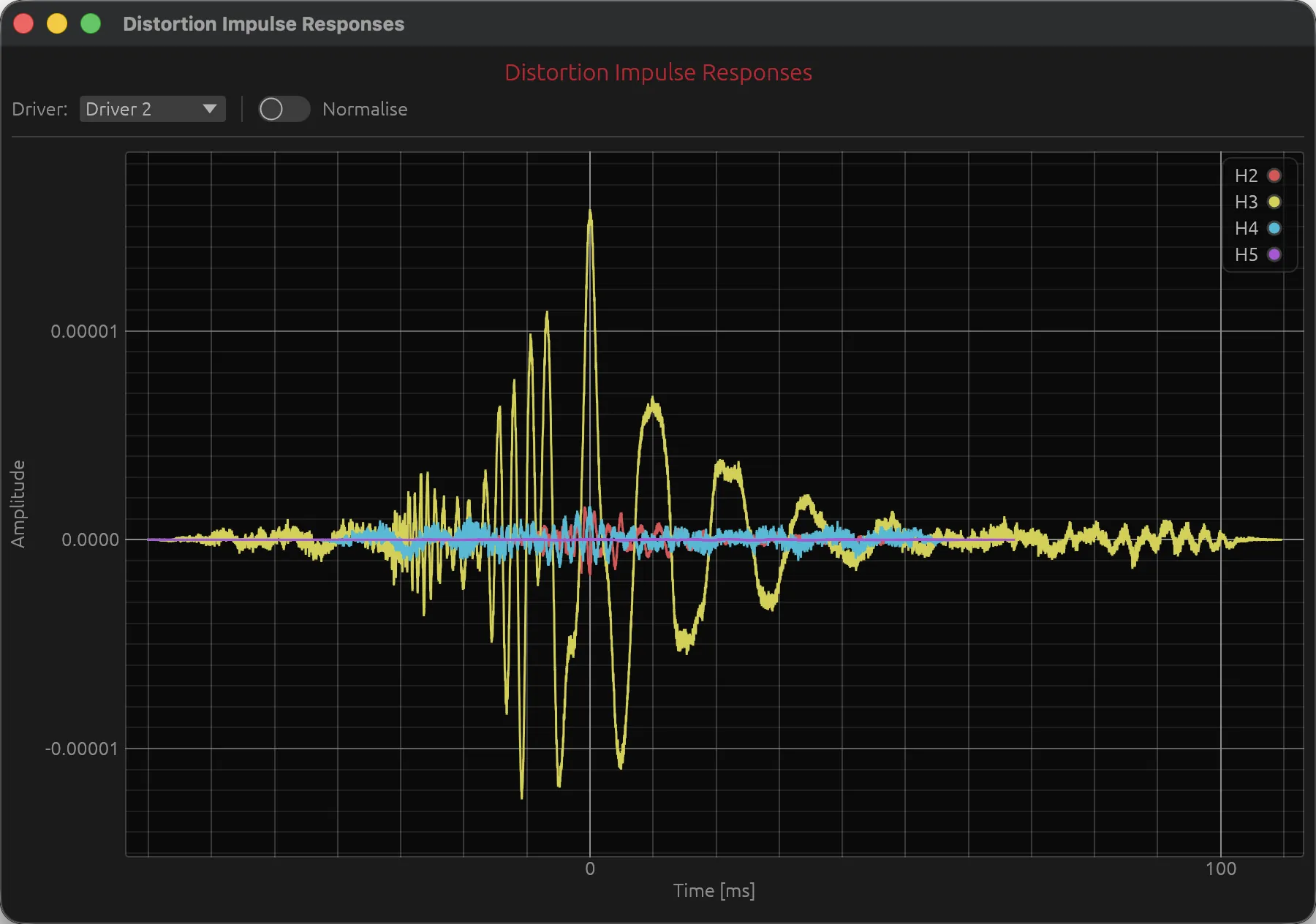
- Harmonic distortion breakdown and distortion impulse responses
- Near-field / far-field splicing wizard
- Auto EQ auto-generate and pre-filter response overlays
- Free updates for all 1.x versions, no subscription
- One activation at a time, movable between your computers
Download LinFIR
.dmg
via Windows store
Why Linear-Phase FIR Filters?
I use linear-phase FIR filtering in every loudspeaker I design, and IIR filters where their minimum-phase behaviour actually helps. It is not a buzzword: it is the most direct way to get a loudspeaker whose drivers add up correctly in time as well as in level.
Compared with classic IIR or passive crossovers, it gives cleaner transients, more stable imaging and a response you can trust. Here is why:
Crossovers Without Phase Rotation
A linear-phase crossover sums drivers without the phase rotation and group delay of classic IIR or passive crossovers, so the impulse and step response stay coherent across the whole band.
Correction That Includes Phase
FIR filters can correct magnitude and phase independently: flatten driver irregularities and excess group delay, or match a target curve, with limits and smoothing so the correction stays sensible.
Creative Multi-Driver Configurations
Blend drivers with linear-phase versions of Linkwitz-Riley, Butterworth, and Bessel filters. Need asymmetric slopes? No problem. Want to apply a gentle low-pass to one woofer in a D’Appolito configuration? Easy.
Use this to:
• Compensate rising frequency response from high-efficiency drivers
• Tweak baffle step compensation
• Improve directivity by reducing upper-frequency overlap
Directivity, Not Just On-Axis
What you hear in a room is mostly reflected sound. Designing against the Listening Window and the Predicted In-Room Response, not just the on-axis curve, is what makes a speaker sound right in a real room.
Minimum Phase When It Matters
LinFIR includes a minimum-phase conversion based on homomorphic filtering (Oppenheim et al., Signal Analysis by Homomorphic Prediction, IEEE TASSP, 1976), and a continuous causality control between linear and minimum phase.
This keeps the magnitude response intact while minimizing latency — useful for live sound, low-latency correction or hybrid designs.
Supported Export Formats
Binary
CSV & Text
WAV
IIR & DSP Platforms
LinFIR in action
 Main window: driver and system responses, impulse and group delay.
 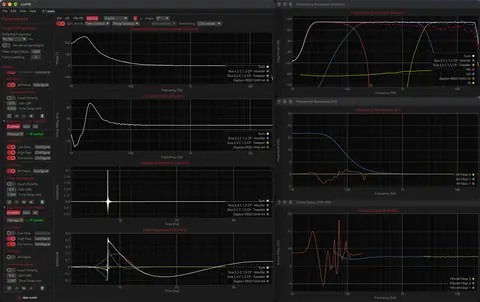 Graphs detached into separate windows for multi-screen setups.
 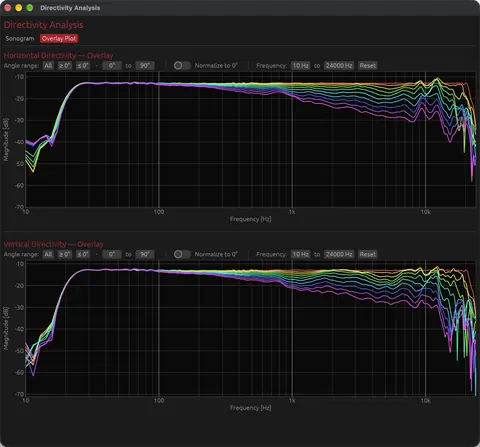 Directivity analysis: horizontal and vertical off-axis overlays.
 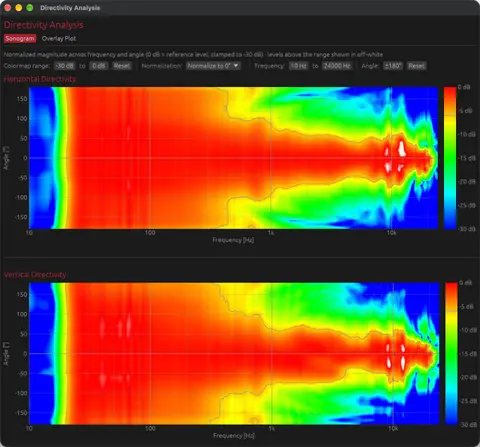 Directivity sonogram, horizontal and vertical.
 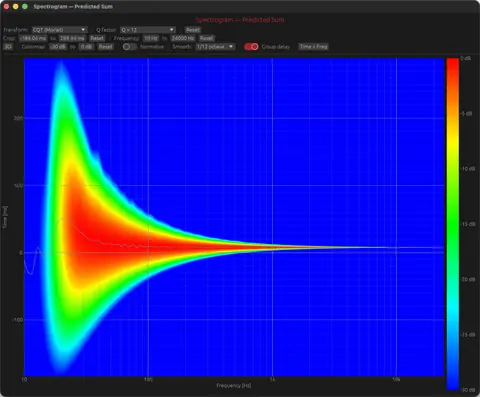 Spectrogram of the impulse response.
 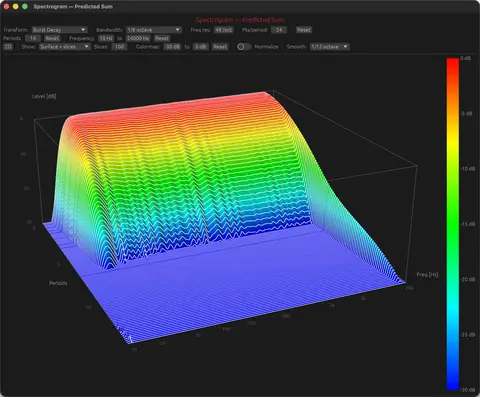 3D waterfall (burst decay).
 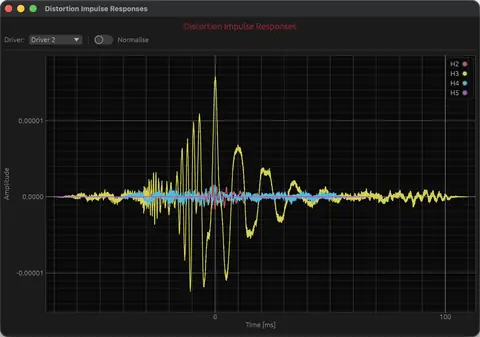 Harmonic distortion impulse responses extracted from the sweep.
 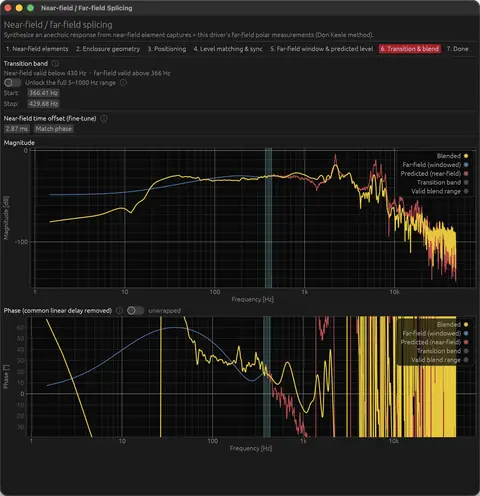 Near-field / far-field splicing: transition and blend.
 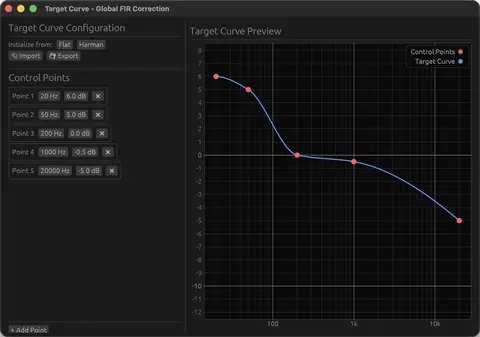 Custom target curve editor.
 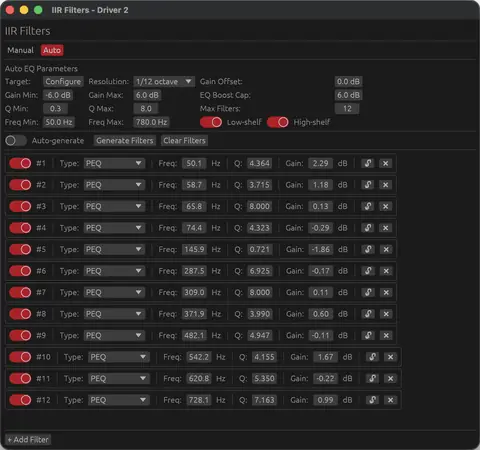 IIR filter bank: parametric EQ, shelves and crossovers.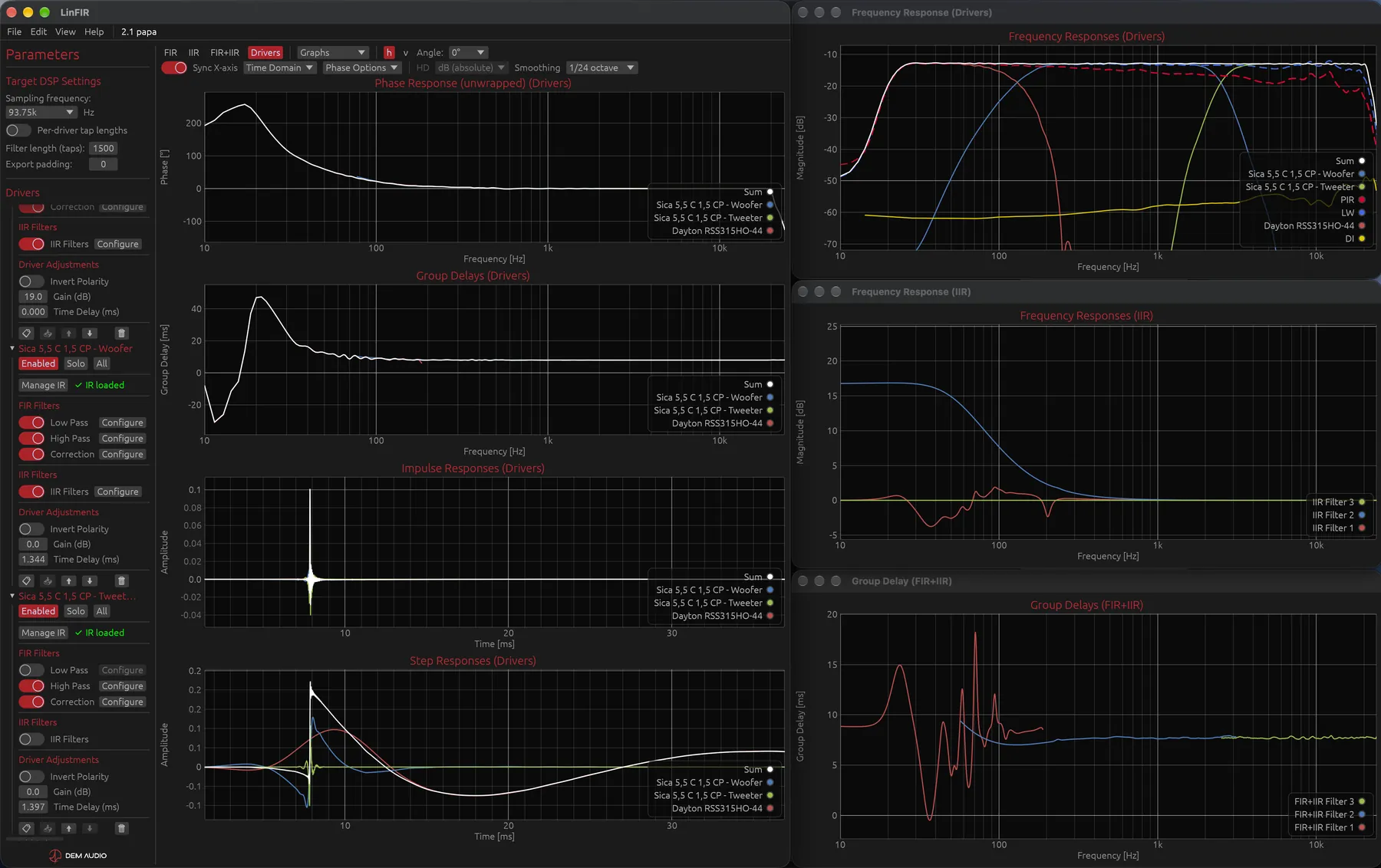
Try It Out
LinFIR is for audio designers who want full control without endless tweaking. It’s made for fast, intelligent workflows. Have questions or want to try it out?